The Future of Savings for Europe’s Citizens
Shaping Europe's Financial Future: Savings and Investments as Catalysts for Sustainable Growth
This report focuses on engaging EU citizens as active investors within the Capital Markets Union. It addresses challenges like low financial literacy and aging populations, advocating for a transition from passive bank deposits to long-term, diversified investments to ensure future financial security.
Authors

Topics
Article Content
The Future of Savings for Europe's Citizens
"Today's proposal for a Union of Savings and Investments is a double win. Households will have more and safer opportunities to invest in capital markets and grow their wealth. At the same time, businesses will gain easier access to capital for innovation, growth, and the creation of quality jobs in Europe."
— Ursula von der Leyen, President of the European Commission
Introduction: Citizens as Key Economic Actors
In the context of growing global economic uncertainty, structural demographic challenges, and accelerated digitalization, the European Union aims to strengthen its economic resilience and competitiveness through deeper integration of capital markets. One of the main priorities in this process is the active engagement of citizens as savers and investors, whose role in capital accumulation remains underutilized. Despite relatively high levels of household savings across the EU, their actual contribution to capital markets remains seriously limited, which leads to an undervalued potential for economic growth, innovation, and competitive advantages of European companies compared to the United States and China.
In recent years, the European Commission has placed particular emphasis on the need to create suitable conditions for the entry of individual investors into capital markets, as part of the construction of the Capital Markets Union (CMU). This strategic priority aims not only to facilitate access to financing for businesses but also to encourage citizens to make more effective use of their personal funds through long-term and diversified investments. In this context, individual savers can become a key driver of sustainable development and the innovation capacity of the EU economy.
The Challenges Facing EU Savers
Demographic Pressures
Demographic changes—especially the aging population—call into question the long-term stability of pension systems. This necessitates alternative and sustainable forms of security, in which private investments and personal responsibility for financial futures come to the forefront as a crucial tool for reliability and peace of mind.
Low Returns on Traditional Savings
Traditional forms of saving, such as bank deposits, offer increasingly low returns in the face of high inflation and market volatility. This further calls into question the effectiveness of saving behavior that is not aligned with actual macroeconomic conditions.
Financial Literacy Gap
According to a Eurobarometer survey from 2023, only 18% of EU citizens demonstrate a high level of financial literacy. Many households lack the necessary knowledge and skills to assess risk, have limited information about the characteristics of financial products, and often fail to understand the benefits of long-term investments. As a result, we are witnessing inequality in access to investment opportunities and increased financial vulnerability across broad social groups.
The Individual Investor: A Key Player
In a world where inflation erodes savings and traditional pension systems face mounting challenges from an aging population, the individual investor is emerging as a key player in the economic game of the future. The time when money sat passively in bank accounts has passed. Today, conscious and informed management of personal finances is essential—one that combines diversification, financial knowledge, and modern instruments capable of responding to the complex realities of the modern economy.
Moving beyond traditional forms of saving such as deposits and real estate, households must seek active ways to grow their capital, secure their future, and contribute to the creation of sustainable growth. This requires not only financial skills but also supportive policies and market frameworks that understand and respond to people's evolving needs.
Key Questions
- How can we transform the average saver into an active investor—one who not only preserves but also grows their financial resources?
- How can we remove the barriers—lack of trust, low financial literacy, psychological hesitations—and foster the kind of long-term thinking needed to address future economic and social risks?
- How can the funds of everyday savers be directed toward Europe's capital markets to support competitiveness, innovation, and the growth of companies in the real economy?
The Savings and Investment Union Strategy
In March 2025, the European Commission presented the ambitious "Savings and Investment Union" strategy, aimed at overcoming the long-standing fragmentation of capital markets within the European Union and promoting the transformation of accumulated bank deposits into productive investments. This will enhance the EU's attractiveness as an investment destination and will be essential for strengthening the Union's economic competitiveness and strategic autonomy.
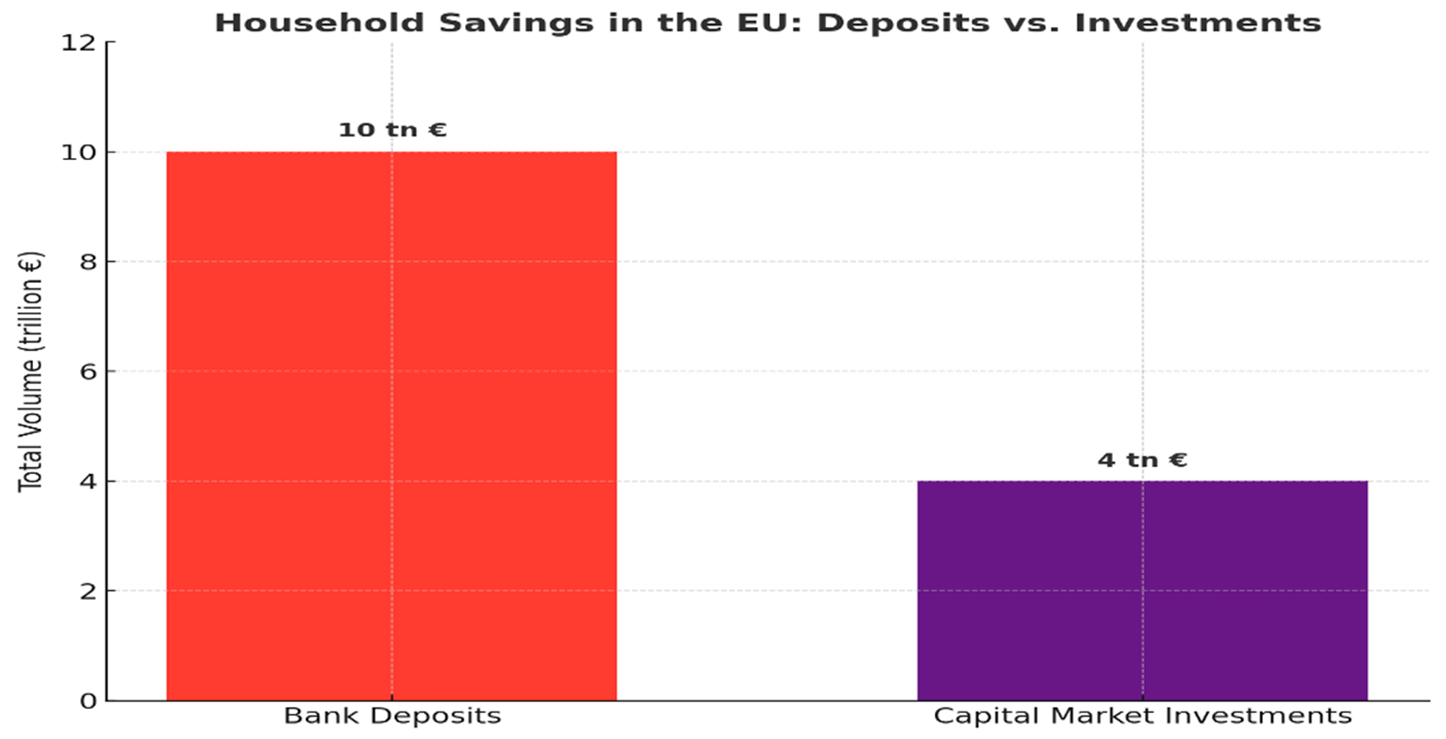
Statistics show that approximately €10 trillion in citizens' savings are held in bank deposits. While these deposits offer security and easy access, they provide lower returns compared to capital market investments. The direct participation of savers in capital markets will bring benefits not only to them individually but also to the economic development of the European Union.
EU Household Financial Assets Distribution (Eurostat, 2024)
- Shares and Investment Fund Units: 35.9%
- Currency and Deposits: 31.2%
- Insurance, Pensions and Standardized Guarantees: 26.9%
- Other Financial Assets: 6.0%
Citizens' savings should not be viewed solely as a form of individual financial security, but also as a strategic resource that can support capital markets and facilitate the transition to an innovative, green, and socially sustainable economy.
The Investment Gap: EU vs. Global Competitors
Against the backdrop of record-high inflation in 2022 and 2023, combined with the relatively low returns from traditional savings instruments such as deposit accounts and government bonds, EU citizens are facing the need to seek alternative strategies for preserving and growing their personal capital.
According to data from the European Central Bank (ECB), the real return on household savings was negative for six consecutive quarters during 2022 and 2023, posing a significant challenge for low- and middle-income households. Studies by the OECD indicate that over 60% of EU citizens feel uncertain when making investment decisions and managing risk.
International Comparison
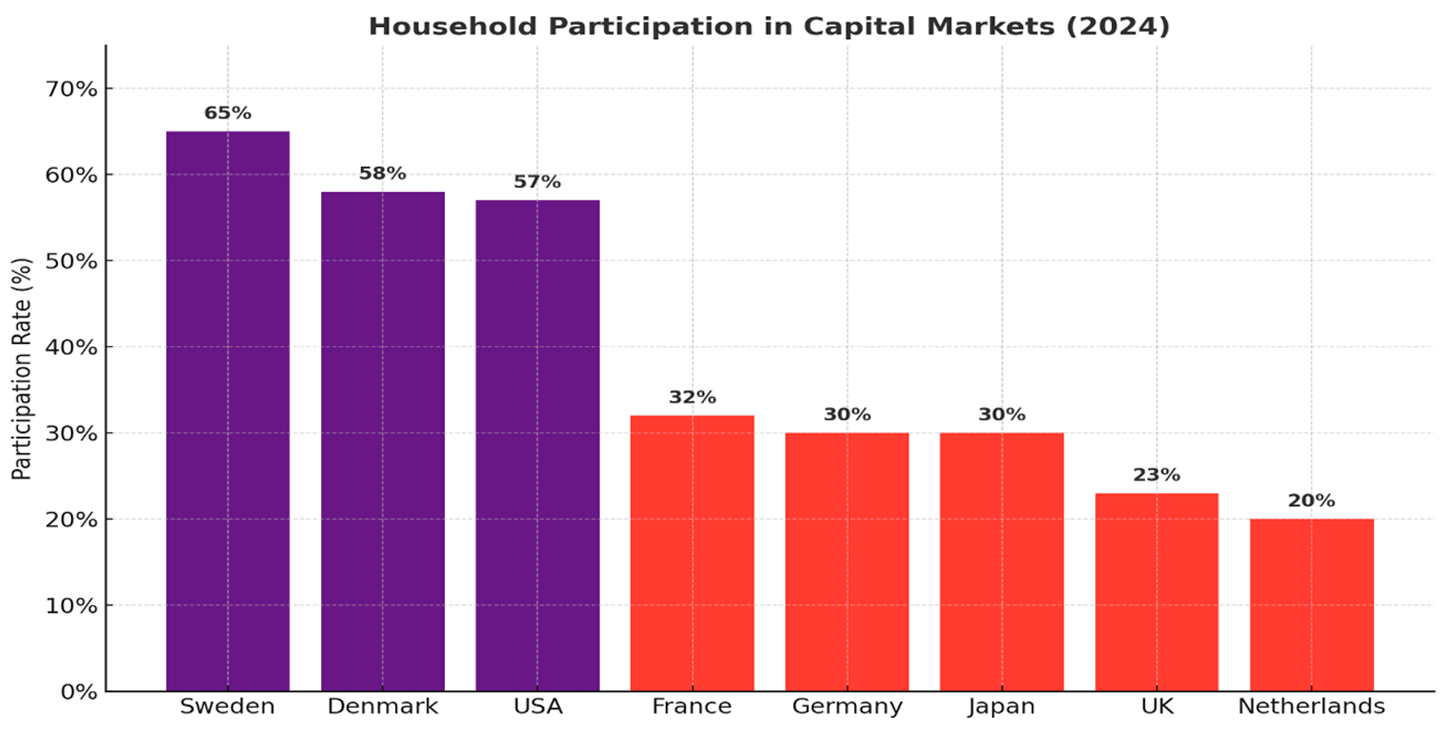
- United States: ~43% of household financial assets in stocks, bonds, and market-based instruments
- Japan: ~30% in market-based instruments
- European Union: barely exceeds 17%
Structure of Household Financial Assets by Country (Q3 2024)
| Country | Deposits (%) | Insurance & Pensions (%) | Investment Funds (%) | Shares & Other Equity (%) |
|---|---|---|---|---|
| Germany | 36.5 | 32.0 | 18.0 | 13.5 |
| France | 34.0 | 36.0 | 12.0 | 18.0 |
| Italy | 48.0 | 26.0 | 12.0 | 14.0 |
| Netherlands | 28.0 | 46.0 | 16.0 | 10.0 |
| Spain | 42.0 | 32.0 | 11.0 | 15.0 |
| Sweden | 22.0 | 42.0 | 21.0 | 15.0 |
| Poland | 58.0 | 22.0 | 10.0 | 10.0 |
| Bulgaria | 68.0 | 16.0 | 6.0 | 10.0 |
Source: ECB Data Portal, Eurostat, National Statistical Institutes
Cultural and Psychological Barriers
Beneath the surface of these data lie complex socio-psychological and cultural factors. Many Europeans approach financial markets with skepticism, often perceiving them as complex, unpredictable, and associated with high risks. The lack of sufficient financial literacy, combined with a negative media portrayal of speculative investments, contributes to the formation of a strong culture of caution.
Unlike the American investment culture, which is built around long-term participation in the stock market through pension funds and individual investments, Europe is dominated by saving models focused on bank deposits, insurance products, and real estate.
The historical context should not be overlooked either—economic and banking crises in certain countries, weak investor protection in the past, and limited access to transparent investment products have fostered a lasting mistrust.
The EU's Strategic Response: Three Pillars
Pillar 1: Tax Incentives
At the core of the "Savings and Investment Union" strategy lies a set of targeted tax incentives designed to transform the way investors approach financial planning:
- Reduced tax rates on capital gains and dividends
- Tax relief for investments in green bonds, innovation funds, and start-ups in priority sectors
- Tax breaks for pension-oriented investment products
These measures establish a direct link between citizens' personal financial well-being and the sustainable economic development of the region.
Pillar 2: Centralized Regulation and Oversight
The strategy emphasizes the creation of a stronger and more centralized supervisory structure aimed at unifying and optimizing the currently fragmented oversight mechanisms across the EU.
- The European Securities and Markets Authority (ESMA) has been granted extended powers for direct supervision of key trading platforms
- Tighter controls over cryptocurrencies and DeFi platforms
- Direct supervision over key trading infrastructures ensuring transparency and stability
Pillar 3: Securitization Reform
The European Commission proposes adapting and simplifying the rules related to securitization—the process by which banks convert loans and other financial assets into tradable securities. This would:
- Free up capital on banks' balance sheets
- Allow banks to issue more loans
- Make financing for new projects more accessible and efficient
In Italy and Spain, banks have already shown increased activity following this model, enabling small and medium-sized enterprises to access the capital needed for digitalization and green modernization.
ESG Investing: The Rise of Sustainable Finance
There is growing interest in sustainable investing—so-called ESG (Environmental, Social, and Governance) investments. For many Europeans, especially younger generations, the ability to direct their capital toward projects with a positive impact on society and the environment serves as a strong motivational factor.
In 2023, investments by major European companies in sustainable projects exceeded €250 billion, representing a 34% increase compared to the previous year. These funds are actively supporting projects in:
- Renewable energy
- Green transport
- Circular economy
Several Member States have introduced reduced tax rates on income derived from investments in green bonds. In Germany and France, these incentives are already being applied successfully, while the Netherlands is introducing additional tax credits for investors in socially responsible funds.
Digitalization: Democratizing Investment
Beyond financial and regulatory instruments, digitalization is a powerful catalyst for rethinking investment models. The development of intuitive online platforms, mobile applications, and robo-advisory services offers a new paradigm in which investing is no longer the exclusive domain of seasoned players or high-net-worth individuals.
Technology is democratizing access, reducing transaction costs, and enabling easier portfolio management, even with low initial amounts. AI-powered robo-advisors provide simple and personalized access to capital markets, allowing even retail investors to build portfolios that reflect their values and investment goals.
Financial Literacy: The Foundation for Change
According to the Organisation for Economic Co-operation and Development (OECD), financial literacy encompasses three core components:
- Financial knowledge
- Financial behavior
- Financial attitudes
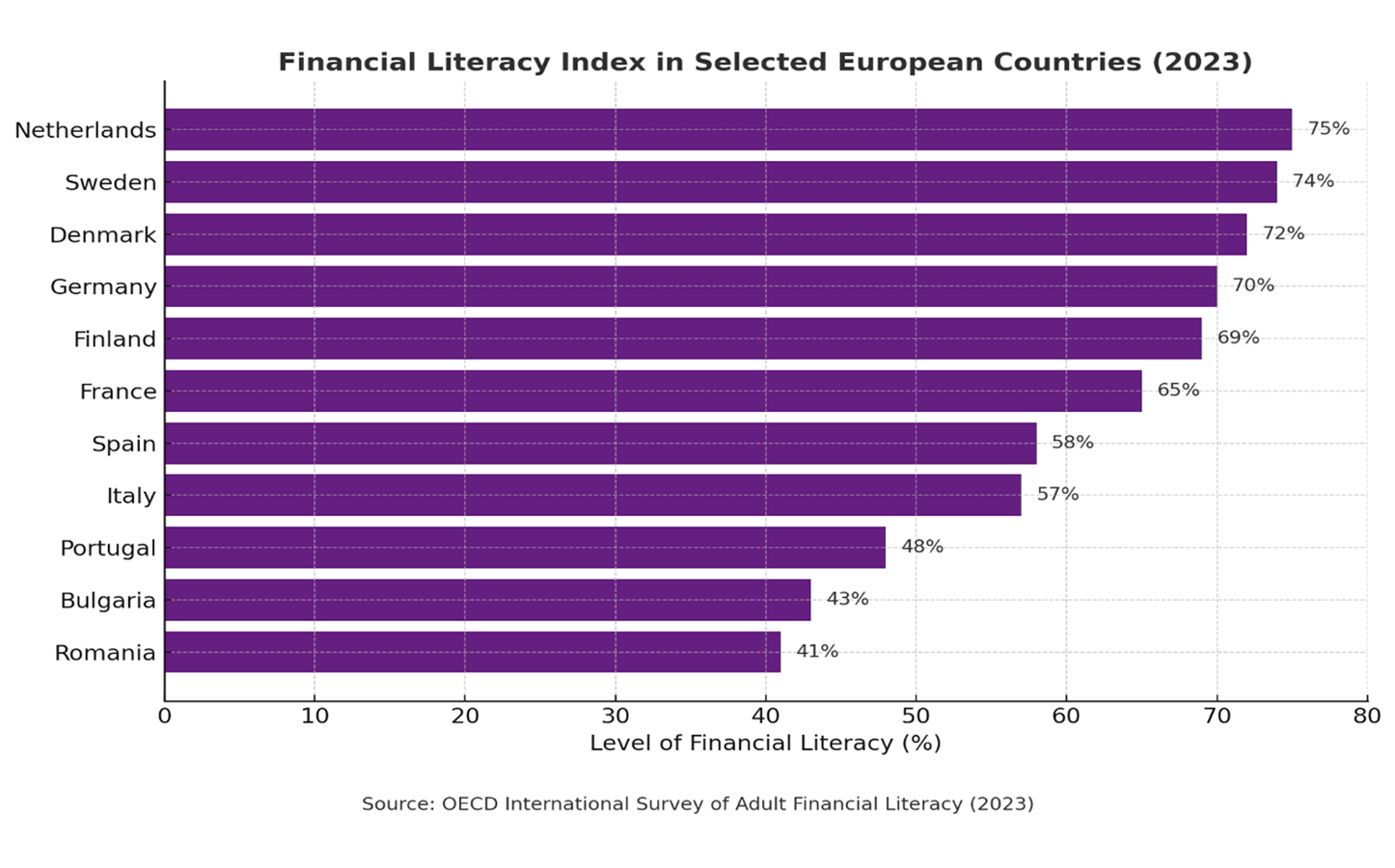
In 2023, the OECD published its most recent international survey on adult financial literacy across 39 countries. The study revealed that the average combined score was 12.7 out of 21 points. High scores were observed in countries such as the Czech Republic, Hong Kong (China), and Estonia.
Financial Literacy in the EU (Eurobarometer, 2023)
- High literacy (>25%): Netherlands, Sweden, Denmark
- Low literacy (<10%): Romania, Bulgaria, Portugal
- Intermediate category: 64% of Europeans
Behavioral Economics Factors
Savers are often guided not by rational analysis but by cognitive biases such as:
- Present bias: preference for immediate rewards over future gains
- Overconfidence
- Loss aversion
2025 Financial Education Initiatives
- Development of unified tools for assessing personal finance management skills
- Mandatory financial education programs in school curricula and adult continuing education
- Enhancement of financial product transparency through clearer PRIIPs documents
- Digital platforms and interactive tools for comparing investment products
In Estonia, digital financial education platforms are already operational and integrated into the national curriculum. In Germany, specialized financial education courses have been developed, including practical seminars and digital simulations.
The Demographic Challenge: Pensions and Long-term Security
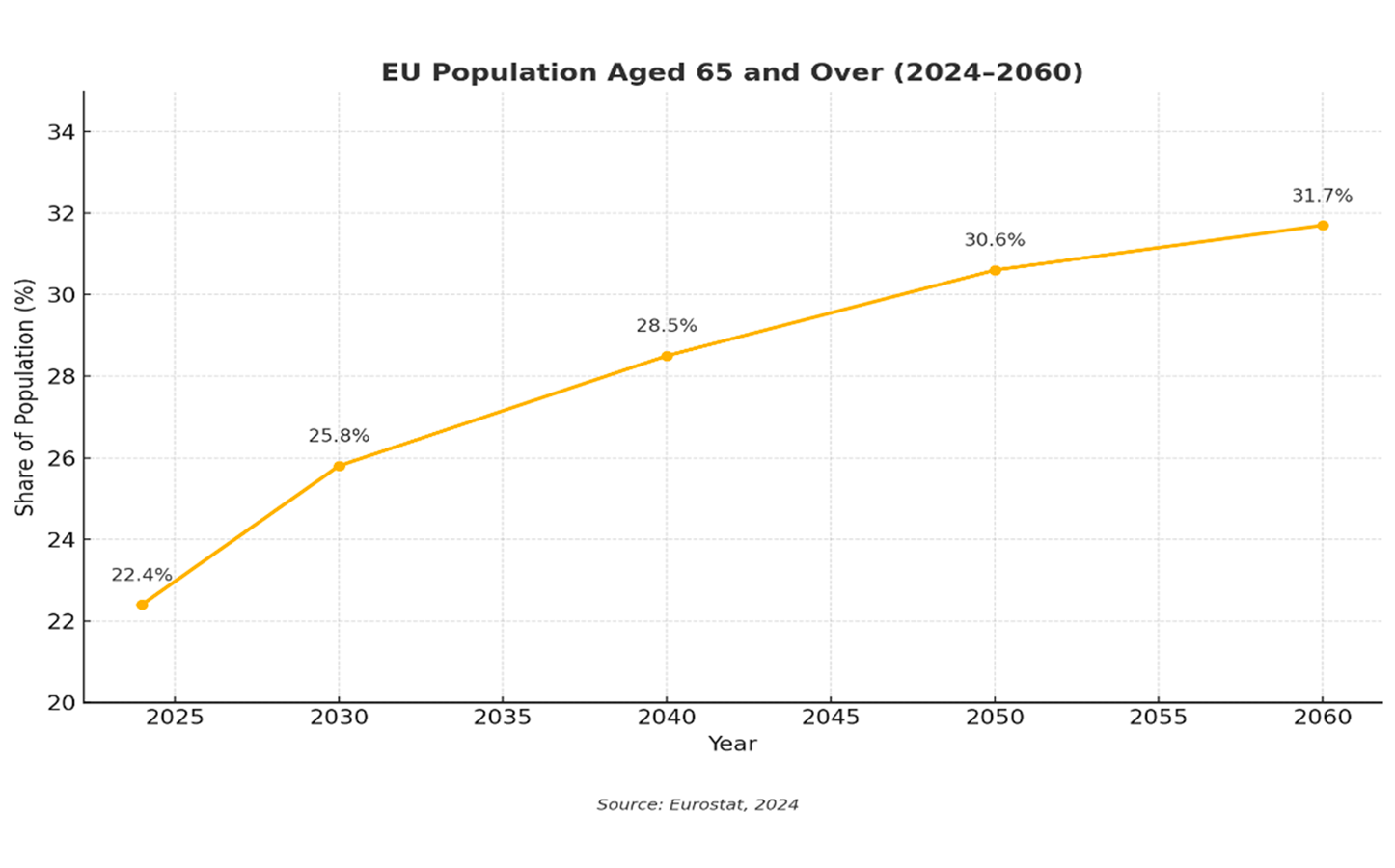
According to the latest Eurostat data from 2024, the share of the population over the age of 65 in the European Union has reached a record 22.4%, and projections for the next 30 years suggest that this figure will exceed 30% in several Member States.
To meet the growing investment needs, the EU will require an additional €750 to €800 billion annually until 2030, with this need expected to increase, especially due to rising defense expenditures.
Traditional state pensions are increasingly proving insufficient. An analysis by Eurostat (2024) shows that the average expected pension in the EU covers only about 60–70% of the necessary expenses for maintaining a normal standard of living after retirement.
Expected Public Pension vs. Real Living Standard Needs (Eurostat, 2024)
| Country | Expected Pension (% of Required Income) | Population Aged 65+ (2024) |
|---|---|---|
| Germany | 68% | 22.0% |
| Poland | 65% | 18.9% |
| Netherlands | 75% | 21.5% |
| Austria | 70% | 22.8% |
| Bulgaria | 50% | 22.1% |
| Spain | 62% | 23.7% |
Pension Policy Innovation for 2025
The main innovation in the EU's pension policy for 2025 is the introduction of a range of tax incentives and regulatory facilitations:
- Lower income tax rates on contributions to voluntary pension funds
- Tax exemptions on investment returns
- Inheritance tax relief
- Guarantees for transparency and investor protection
Country Examples
Poland: Tax relief on pension fund contributions, along with state co-payments, actively encourages younger generations to invest in long-term pension plans. The system includes elements of automatic enrolment.
Netherlands: Supplementary pension funds benefit from significant tax advantages as part of a comprehensive three-pillar pension system—one of the most sustainable in Europe.
Austria: Applies a combination of tax incentives and employer-targeted preferences to support employees in joining additional pension plans.
Digital Innovation in Pension Management
The introduction of digital platforms and tools for managing pension savings offers investors greater control and insight into the status of their assets. Powered by artificial intelligence and machine learning, these systems provide personalized investment strategies tailored to individual risk profiles and time horizons.
Conclusion: A Path Toward Financial Empowerment
The European Union is not merely defining new financial frameworks and policies—it is outlining a path toward a future in which economic security and sustainability become inseparable aspects of every citizen's life. By embedding innovation, transparency, and education at the core of capital markets, the EU is reshaping traditional models of investing and retirement planning, empowering individuals to take control of their financial futures.
It is a vision that meets the challenges of the present and fosters a sustainable and fair economy, where every investor—regardless of the size of their portfolio—can become an active participant in the green transition, the digital revolution, and social well-being.
The strategies of the European Commission are more than policy—they represent a profound transformation that will shape the lives and prosperity of future generations, leaving behind a legacy of opportunity, fairness, and progress.
The time for change is now. This transition is not easy, but it is possible. It requires a willingness to learn, the courage to face the unknown, and the readiness to seize the new opportunities offered by digitalization, innovation, and sustainable financial instruments. Every investment made with the future in mind is a step toward a more secure life and a more resilient economy.
Article Content
The Future of Savings for Europe's Citizens
"Today's proposal for a Union of Savings and Investments is a double win. Households will have more and safer opportunities to invest in capital markets and grow their wealth. At the same time, businesses will gain easier access to capital for innovation, growth, and the creation of quality jobs in Europe."
— Ursula von der Leyen, President of the European Commission
Introduction: Citizens as Key Economic Actors
In the context of growing global economic uncertainty, structural demographic challenges, and accelerated digitalization, the European Union aims to strengthen its economic resilience and competitiveness through deeper integration of capital markets. One of the main priorities in this process is the active engagement of citizens as savers and investors, whose role in capital accumulation remains underutilized. Despite relatively high levels of household savings across the EU, their actual contribution to capital markets remains seriously limited, which leads to an undervalued potential for economic growth, innovation, and competitive advantages of European companies compared to the United States and China.
In recent years, the European Commission has placed particular emphasis on the need to create suitable conditions for the entry of individual investors into capital markets, as part of the construction of the Capital Markets Union (CMU). This strategic priority aims not only to facilitate access to financing for businesses but also to encourage citizens to make more effective use of their personal funds through long-term and diversified investments. In this context, individual savers can become a key driver of sustainable development and the innovation capacity of the EU economy.
The Challenges Facing EU Savers
Demographic Pressures
Demographic changes—especially the aging population—call into question the long-term stability of pension systems. This necessitates alternative and sustainable forms of security, in which private investments and personal responsibility for financial futures come to the forefront as a crucial tool for reliability and peace of mind.
Low Returns on Traditional Savings
Traditional forms of saving, such as bank deposits, offer increasingly low returns in the face of high inflation and market volatility. This further calls into question the effectiveness of saving behavior that is not aligned with actual macroeconomic conditions.
Financial Literacy Gap
According to a Eurobarometer survey from 2023, only 18% of EU citizens demonstrate a high level of financial literacy. Many households lack the necessary knowledge and skills to assess risk, have limited information about the characteristics of financial products, and often fail to understand the benefits of long-term investments. As a result, we are witnessing inequality in access to investment opportunities and increased financial vulnerability across broad social groups.
The Individual Investor: A Key Player
In a world where inflation erodes savings and traditional pension systems face mounting challenges from an aging population, the individual investor is emerging as a key player in the economic game of the future. The time when money sat passively in bank accounts has passed. Today, conscious and informed management of personal finances is essential—one that combines diversification, financial knowledge, and modern instruments capable of responding to the complex realities of the modern economy.
Moving beyond traditional forms of saving such as deposits and real estate, households must seek active ways to grow their capital, secure their future, and contribute to the creation of sustainable growth. This requires not only financial skills but also supportive policies and market frameworks that understand and respond to people's evolving needs.
Key Questions
- How can we transform the average saver into an active investor—one who not only preserves but also grows their financial resources?
- How can we remove the barriers—lack of trust, low financial literacy, psychological hesitations—and foster the kind of long-term thinking needed to address future economic and social risks?
- How can the funds of everyday savers be directed toward Europe's capital markets to support competitiveness, innovation, and the growth of companies in the real economy?
The Savings and Investment Union Strategy
In March 2025, the European Commission presented the ambitious "Savings and Investment Union" strategy, aimed at overcoming the long-standing fragmentation of capital markets within the European Union and promoting the transformation of accumulated bank deposits into productive investments. This will enhance the EU's attractiveness as an investment destination and will be essential for strengthening the Union's economic competitiveness and strategic autonomy.
Statistics show that approximately €10 trillion in citizens' savings are held in bank deposits. While these deposits offer security and easy access, they provide lower returns compared to capital market investments. The direct participation of savers in capital markets will bring benefits not only to them individually but also to the economic development of the European Union.
EU Household Financial Assets Distribution (Eurostat, 2024)
- Shares and Investment Fund Units: 35.9%
- Currency and Deposits: 31.2%
- Insurance, Pensions and Standardized Guarantees: 26.9%
- Other Financial Assets: 6.0%
Citizens' savings should not be viewed solely as a form of individual financial security, but also as a strategic resource that can support capital markets and facilitate the transition to an innovative, green, and socially sustainable economy.
The Investment Gap: EU vs. Global Competitors
Against the backdrop of record-high inflation in 2022 and 2023, combined with the relatively low returns from traditional savings instruments such as deposit accounts and government bonds, EU citizens are facing the need to seek alternative strategies for preserving and growing their personal capital.
According to data from the European Central Bank (ECB), the real return on household savings was negative for six consecutive quarters during 2022 and 2023, posing a significant challenge for low- and middle-income households. Studies by the OECD indicate that over 60% of EU citizens feel uncertain when making investment decisions and managing risk.
International Comparison
- United States: ~43% of household financial assets in stocks, bonds, and market-based instruments
- Japan: ~30% in market-based instruments
- European Union: barely exceeds 17%
Structure of Household Financial Assets by Country (Q3 2024)
| Country | Deposits (%) | Insurance & Pensions (%) | Investment Funds (%) | Shares & Other Equity (%) |
|---|---|---|---|---|
| Germany | 36.5 | 32.0 | 18.0 | 13.5 |
| France | 34.0 | 36.0 | 12.0 | 18.0 |
| Italy | 48.0 | 26.0 | 12.0 | 14.0 |
| Netherlands | 28.0 | 46.0 | 16.0 | 10.0 |
| Spain | 42.0 | 32.0 | 11.0 | 15.0 |
| Sweden | 22.0 | 42.0 | 21.0 | 15.0 |
| Poland | 58.0 | 22.0 | 10.0 | 10.0 |
| Bulgaria | 68.0 | 16.0 | 6.0 | 10.0 |
Source: ECB Data Portal, Eurostat, National Statistical Institutes
Cultural and Psychological Barriers
Beneath the surface of these data lie complex socio-psychological and cultural factors. Many Europeans approach financial markets with skepticism, often perceiving them as complex, unpredictable, and associated with high risks. The lack of sufficient financial literacy, combined with a negative media portrayal of speculative investments, contributes to the formation of a strong culture of caution.
Unlike the American investment culture, which is built around long-term participation in the stock market through pension funds and individual investments, Europe is dominated by saving models focused on bank deposits, insurance products, and real estate.
The historical context should not be overlooked either—economic and banking crises in certain countries, weak investor protection in the past, and limited access to transparent investment products have fostered a lasting mistrust.
The EU's Strategic Response: Three Pillars
Pillar 1: Tax Incentives
At the core of the "Savings and Investment Union" strategy lies a set of targeted tax incentives designed to transform the way investors approach financial planning:
- Reduced tax rates on capital gains and dividends
- Tax relief for investments in green bonds, innovation funds, and start-ups in priority sectors
- Tax breaks for pension-oriented investment products
These measures establish a direct link between citizens' personal financial well-being and the sustainable economic development of the region.
Pillar 2: Centralized Regulation and Oversight
The strategy emphasizes the creation of a stronger and more centralized supervisory structure aimed at unifying and optimizing the currently fragmented oversight mechanisms across the EU.
- The European Securities and Markets Authority (ESMA) has been granted extended powers for direct supervision of key trading platforms
- Tighter controls over cryptocurrencies and DeFi platforms
- Direct supervision over key trading infrastructures ensuring transparency and stability
Pillar 3: Securitization Reform
The European Commission proposes adapting and simplifying the rules related to securitization—the process by which banks convert loans and other financial assets into tradable securities. This would:
- Free up capital on banks' balance sheets
- Allow banks to issue more loans
- Make financing for new projects more accessible and efficient
In Italy and Spain, banks have already shown increased activity following this model, enabling small and medium-sized enterprises to access the capital needed for digitalization and green modernization.
ESG Investing: The Rise of Sustainable Finance
There is growing interest in sustainable investing—so-called ESG (Environmental, Social, and Governance) investments. For many Europeans, especially younger generations, the ability to direct their capital toward projects with a positive impact on society and the environment serves as a strong motivational factor.
In 2023, investments by major European companies in sustainable projects exceeded €250 billion, representing a 34% increase compared to the previous year. These funds are actively supporting projects in:
- Renewable energy
- Green transport
- Circular economy
Several Member States have introduced reduced tax rates on income derived from investments in green bonds. In Germany and France, these incentives are already being applied successfully, while the Netherlands is introducing additional tax credits for investors in socially responsible funds.
Digitalization: Democratizing Investment
Beyond financial and regulatory instruments, digitalization is a powerful catalyst for rethinking investment models. The development of intuitive online platforms, mobile applications, and robo-advisory services offers a new paradigm in which investing is no longer the exclusive domain of seasoned players or high-net-worth individuals.
Technology is democratizing access, reducing transaction costs, and enabling easier portfolio management, even with low initial amounts. AI-powered robo-advisors provide simple and personalized access to capital markets, allowing even retail investors to build portfolios that reflect their values and investment goals.
Financial Literacy: The Foundation for Change
According to the Organisation for Economic Co-operation and Development (OECD), financial literacy encompasses three core components:
- Financial knowledge
- Financial behavior
- Financial attitudes
In 2023, the OECD published its most recent international survey on adult financial literacy across 39 countries. The study revealed that the average combined score was 12.7 out of 21 points. High scores were observed in countries such as the Czech Republic, Hong Kong (China), and Estonia.
Financial Literacy in the EU (Eurobarometer, 2023)
- High literacy (>25%): Netherlands, Sweden, Denmark
- Low literacy (<10%): Romania, Bulgaria, Portugal
- Intermediate category: 64% of Europeans
Behavioral Economics Factors
Savers are often guided not by rational analysis but by cognitive biases such as:
- Present bias: preference for immediate rewards over future gains
- Overconfidence
- Loss aversion
2025 Financial Education Initiatives
- Development of unified tools for assessing personal finance management skills
- Mandatory financial education programs in school curricula and adult continuing education
- Enhancement of financial product transparency through clearer PRIIPs documents
- Digital platforms and interactive tools for comparing investment products
In Estonia, digital financial education platforms are already operational and integrated into the national curriculum. In Germany, specialized financial education courses have been developed, including practical seminars and digital simulations.
The Demographic Challenge: Pensions and Long-term Security
According to the latest Eurostat data from 2024, the share of the population over the age of 65 in the European Union has reached a record 22.4%, and projections for the next 30 years suggest that this figure will exceed 30% in several Member States.
To meet the growing investment needs, the EU will require an additional €750 to €800 billion annually until 2030, with this need expected to increase, especially due to rising defense expenditures.
Traditional state pensions are increasingly proving insufficient. An analysis by Eurostat (2024) shows that the average expected pension in the EU covers only about 60–70% of the necessary expenses for maintaining a normal standard of living after retirement.
Expected Public Pension vs. Real Living Standard Needs (Eurostat, 2024)
| Country | Expected Pension (% of Required Income) | Population Aged 65+ (2024) |
|---|---|---|
| Germany | 68% | 22.0% |
| Poland | 65% | 18.9% |
| Netherlands | 75% | 21.5% |
| Austria | 70% | 22.8% |
| Bulgaria | 50% | 22.1% |
| Spain | 62% | 23.7% |
Pension Policy Innovation for 2025
The main innovation in the EU's pension policy for 2025 is the introduction of a range of tax incentives and regulatory facilitations:
- Lower income tax rates on contributions to voluntary pension funds
- Tax exemptions on investment returns
- Inheritance tax relief
- Guarantees for transparency and investor protection
Country Examples
Poland: Tax relief on pension fund contributions, along with state co-payments, actively encourages younger generations to invest in long-term pension plans. The system includes elements of automatic enrolment.
Netherlands: Supplementary pension funds benefit from significant tax advantages as part of a comprehensive three-pillar pension system—one of the most sustainable in Europe.
Austria: Applies a combination of tax incentives and employer-targeted preferences to support employees in joining additional pension plans.
Digital Innovation in Pension Management
The introduction of digital platforms and tools for managing pension savings offers investors greater control and insight into the status of their assets. Powered by artificial intelligence and machine learning, these systems provide personalized investment strategies tailored to individual risk profiles and time horizons.
Conclusion: A Path Toward Financial Empowerment
The European Union is not merely defining new financial frameworks and policies—it is outlining a path toward a future in which economic security and sustainability become inseparable aspects of every citizen's life. By embedding innovation, transparency, and education at the core of capital markets, the EU is reshaping traditional models of investing and retirement planning, empowering individuals to take control of their financial futures.
It is a vision that meets the challenges of the present and fosters a sustainable and fair economy, where every investor—regardless of the size of their portfolio—can become an active participant in the green transition, the digital revolution, and social well-being.
The strategies of the European Commission are more than policy—they represent a profound transformation that will shape the lives and prosperity of future generations, leaving behind a legacy of opportunity, fairness, and progress.
The time for change is now. This transition is not easy, but it is possible. It requires a willingness to learn, the courage to face the unknown, and the readiness to seize the new opportunities offered by digitalization, innovation, and sustainable financial instruments. Every investment made with the future in mind is a step toward a more secure life and a more resilient economy.